by ABFRLadmin | March 27, 2026
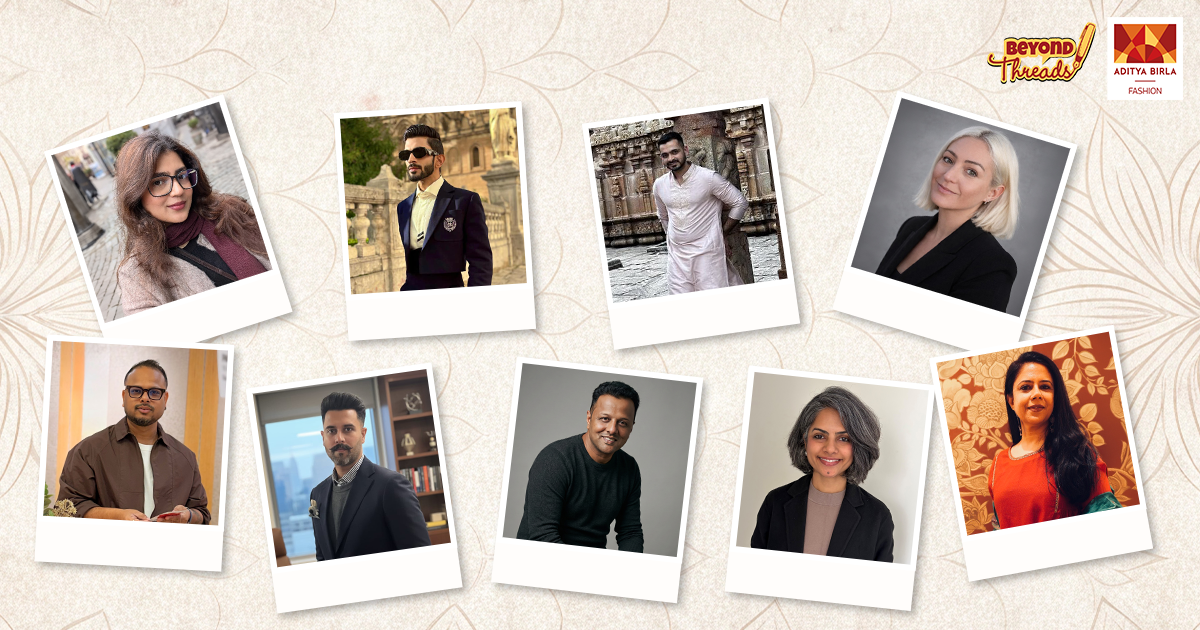
We asked our Design Leaders at ABFRL about their thoughts on how fashion is changing beyond the seasonal cycle.
The traditional calendar is no longer the fashion industry’s compass.
For decades, style moved to the rhythm of Spring/Summer and Autumn/Winter. Designers worked months in advance, unveiled their collections, and the world waited patiently for the seasons to arrive.
But look at any street corner today, and you will observe that fashion now lives in real time – shaped by digital culture, evolving lifestyles, and consumers who expect style to keep up with the pace of their lives.We spoke to the design leaders at ABFRL about what this shift means for the future of fashion.
1. From Climate to Context
The traditional “season” was dictated by the weather outside. Today, fashion is dictated by the moment. According to Gaurav Agarwal at TCNS Brands, fashion has pivoted toward relevance. Gen-Z responds to things that feel current and accessible rather than waiting for global fashion seasons.
This sentiment is echoed by Pooja Bedi at TCNS Brands, who points out that the modern customer isn’t shopping for a specific weather pattern, but for their actual life. “Customers want comfortable, versatile pieces they can wear across occasions,” she says. In the retail space, this means the “big drop” is being replaced by thoughtful updates.
2. Wardrobe Staples & Capsule Style Dressing
If we aren’t buying for seasons, what are we actually buying? Our experts suggest we’re shifting toward building foundations. Victoria Barker at Pantaloons sees the industry evolving around strong core wardrobe staples that endure, where trends are just layers added on top of a permanent base rather than the whole outfit. Rajiv Bajaj at Pantaloons calls this the move toward capsule-style dressing. Essentially, the days of buying disposable clothes that expire in three months are fading. Instead, we’re looking for versatility, intentionality, and longevity with purchases that balance quality, relevance, value, and newness.
Vandana Gupta at Jaypore captures this shift perfectly by noting that trends don’t just come and go anymore they slowly evolve and blend into a permanent style that stays in your closet for the long haul. “Seasonal urgency is moving towards a sense of permanence guided by use, relevance, and longevity”, she shares.
3. From Looking Like Everyone to Feeling like Yourself
Perhaps the most profound change is the shift from looking like everyone else to feeling like yourself. For Rahul Das at Shantanu and Nikhil, fashion has evolved beyond trends to become a method of storytelling, driven by emotion, intent, and personal identity.
This isn’t just about aesthetics; it’s about belonging. Shatakshi Kumar at TMRW Brands argues that the story, identity, and emotion are the new fashion essentials. In her view, community-building is now a more powerful currency for brands than simply following seasonal trends. People don’t just want to wear a brand; they want to resonate with its purpose.
4. The Technology of Style
While the emotional side of fashion is growing, so is the technical side. We are moving away from the guesswork of seasonal planning. Ameya Raje at TMRW Brands describes this as a shift to a continuous, data-informed flow. This adaptive creation allows brands to respond in real-time to culture and technology, ensuring that what is on the shelves actually mirrors how people are living right now.
5. A Confluence of Clear Purpose, Utility, And Aesthetics
As the cycle speeds up in terms of data, it is slowing down in terms of consumption. Bhanu Dhingra at TASVA reminds us that true design must be a confluence of clear purpose, utility, and aesthetics. Without them, fashion is just reduced to manufacturing and fittings.
The future of design is being shaped by external forces we can’t ignore. As Victoria Barker at Pantaloons notes, the economy, social unrest, and cultural shifts are now increasingly becoming drivers of what we choose to wear. Fashion is no longer a bubble; it is a mirror.
So, Is Fashion Still About Seasons?
Everything considered, stepping out in wool clothes at 40 degrees isn’t fashion-forward – so seasons do still have influence. But as a driver of style, the “season” has evolved. We are entering an era of permanence and personalization.
We are no longer dressing just for the weather; we are dressing for our identities, our values, and our multifaceted lives. As our designers have made clear, the future of fashion isn’t reliant on a calendar – it’s based on the purpose, utility, and the stories we choose to tell through what we wear.