by ABFRLadmin | July 21, 2026
Welcome to the first in our Denim Decoded series where we explore expert POV about everything denim! Read to find out the 4 trends our designers at TMRW house of brands are noticing.
For years, men’s denim was the most dependable part of the wardrobe. Easy to wear, easy to repeat and easy to not overthink.
Today, denim is no longer just an everyday essential. It has become a style signal. Fueled by global fashion access, social media, and an uncompromising demand for comfort, men’s denim has evolved from an everyday essential into something much more complex.
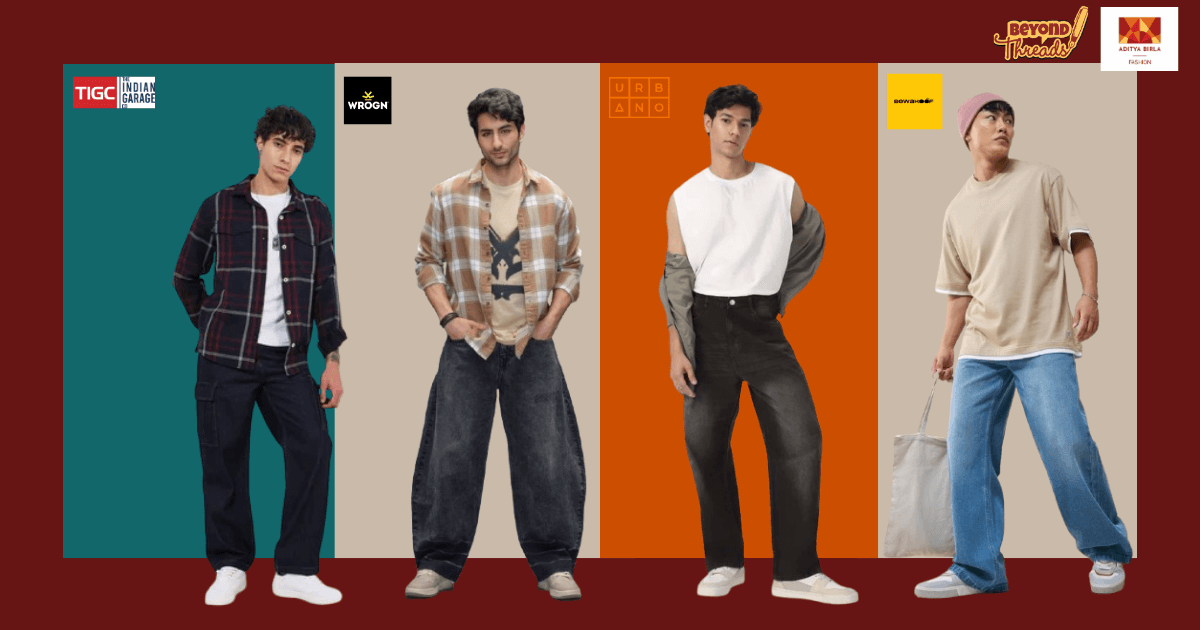
We sat down with design leaders from Urbano, The Indian Garage Co. (TIGC), WROGN, and Bewakoof to unpack the macro shifts shaping the Indian denim market.
The consensus among top designers is clear: the Indian consumer is no longer buying just another pair of jeans. However, this evolution looks slightly different depending on who you ask.
Ishika Oberoi, Urbano, shared that denim is becoming “a key style statement,” with consumers looking for silhouettes, washes and finishes that reflect personal style while still expecting comfort and versatility.
At WROGN, Sanjay Kumar Suman adds an important generational lens. While many millennials still treat denim as an everyday essential, Gen Z is increasingly using it as a fashion statement, often styled with oversized T-shirts and shirts.
Trend takeaway: “Denim has evolved from being just an everyday essential to becoming one of the strongest style statements in a man’s wardrobe”
Pinky Rai, The Indian Garage Co.
For the longest time, a slim fit denim reigned supreme in the markets. Today, loose fit styles – ones that battled initial concerns about their mass appeal, have come to dominate consumer demand, proving that comfort and baggier proportions could outperform traditional slim fits.
Pinky Rai, TIGC shares, “Five years ago, slim fits dominated the market. Today, consumers are confidently moving towards comfort fit, bootcut, relaxed fit, and even looser silhouettes.”
Echoing this opinion, Ishika Oberoi, Urbano, believes relaxed and baggy fits have especially gained popularity among younger consumers looking for comfort and a more fashion forward look. Sanjay Kumar Suman shares that at WROGN, loose fit denim and cargo or carpenter inspired styles fit this bill exactly – unimaginable half a decade ago, but all the craze today.
Trend takeaway: “Relaxed and baggy silhouettes, once considered risky, are now key growth categories, while oversized global trends are being adapted into more wearable styles for the Indian market.”
Sneh Vania, Bewakoof
Global denim trends travel fast, but the Indian consumer is not adopting every runway idea as is.
Pinky Rai, TIGC, says that exaggerated runway silhouettes and extremely oversized jeans look visually exciting, but are still quite niche for India. The reason behind it, as shared by Ishika Oberoi, Urbano, as well, is that denim here still needs to work across occasions, climates and lifestyles. According to Sanjay Kumar Suman, WROGN, trends like balloon fit and barrel fit denims are not ones that will work for an average Indian consumer.
This makes practicality a key filter. Indian men are open to experimentation, but not at the cost of everyday wearability.
Trend takeaway: The winning denim trend in India is not the loudest one. It is the one that can move from inspiration board to everyday wardrobe.
A major consumer shift is the rise of fit awareness.
Earlier, many shoppers bought denim by colour, wash or waist size. According to Pinky Rai, TIGC, the shift is visible in how consumers now ask for specific fits by name instead. Today, they specifically ask for relaxed, loose, bootcut, baggy, and straight fit denim. They are also comparing stretch, fabric composition, comfort and versatility.
Ishika Oberoi, Urbano, elaborates that social media and easier access to global fashion have also made them more aware of evolving denim trends making consumers are far more informed and intentional in their purchase decisions.
“At Urbano, this has reinforced our approach of creating denim that balances trend with practicality. We see this shift as a move towards more thoughtful buying, where design, comfort and long-term value carry as much weight as aesthetics.”
Ishika Oberoi, Urbano
Sneh Vania thinks there is indeed room left. He believes that despite faster trend cycles, creativity remains crucial, with brands balancing speed and originality.
Ishika Oberoi and Pinky Rai also observe that creativity today isn’t about following every trend – it’s about interpreting them in a way that has lasting value.
However, sometimes, trends demand to be followed. So, where does creativity find room there?
Sanjay Kumar Suman shares some insight explaining that denim has two parts to it:
#1 Product Authenticity (product driven) – Which is only achieved with experience and creativity
#2 Visual Outlook (trend driven) – Where the designing can adapt to trend fluctuation
“The modern Indian shopper is incredibly educated. They no longer shop blindly by waist size alone. The next phase of denim growth will come from brands that can read trends sharply, translate them for Indian lifestyles and build products that remain relevant beyond one season.”
Pankaj Keyal, Principal, Category & Growth, TMRW
For fashion enthusiasts, this makes denim more exciting. For marketers, it opens richer storytelling around identity, comfort and culture. For brand teams, it reinforces the need to read consumer behaviour closely.
Denim has not moved away from its everyday roots. It has simply become more articulate.